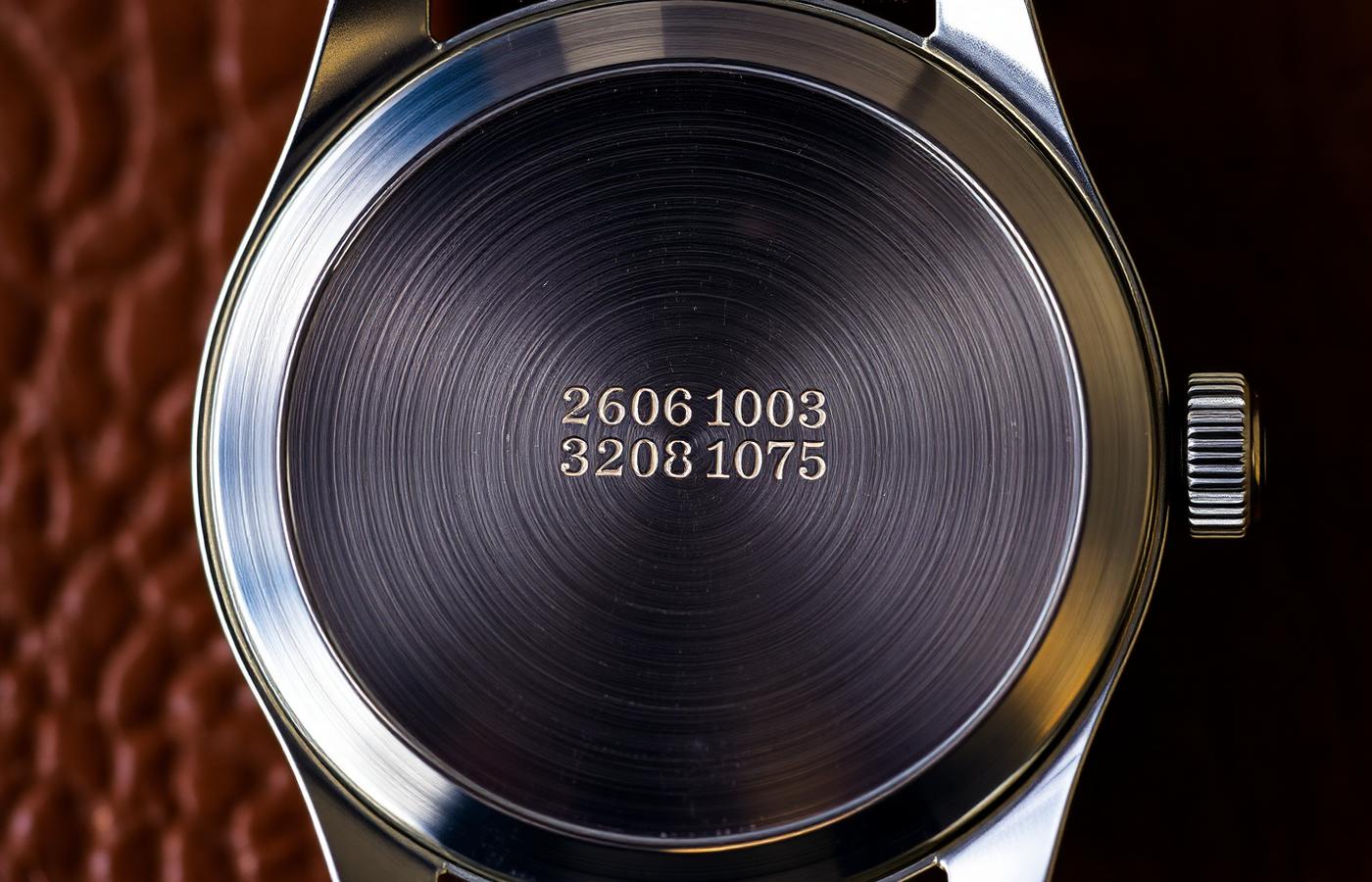
Reading Hallmarks and Case-Maker Marks: The Overlooked Authentication Layer
Precious metal hallmarks and case-maker punches are among the most reliable dating tools available, and among the least studied by collectors focused on dials and movements.
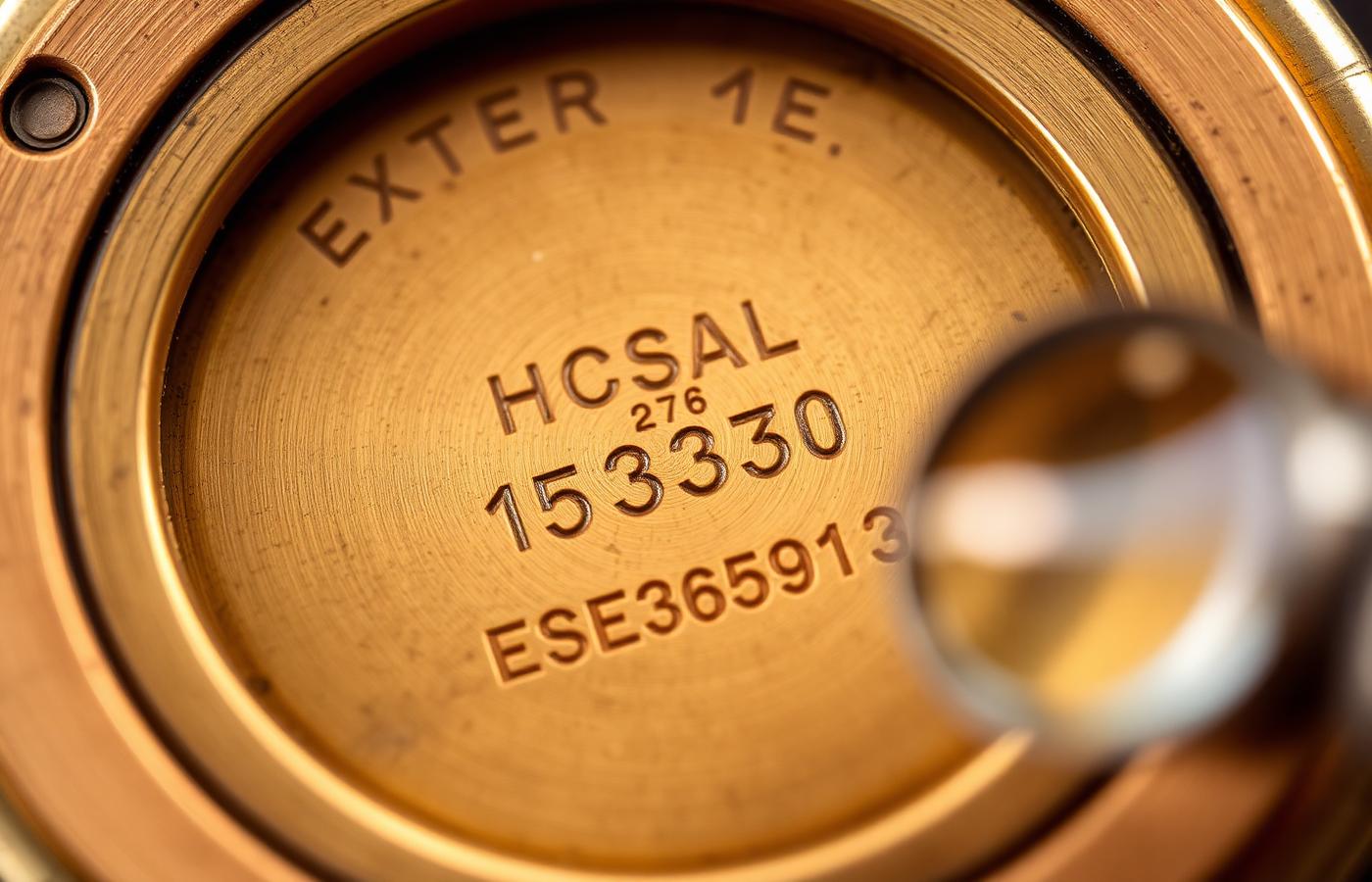
Most collectors learn to read dials before they learn to read cases, and learn to read movements before they learn to read metal. That sequence is understandable, since dials carry the visual identity of a watch and movements carry its mechanical interest. But it leaves the single most independently verifiable element of a vintage watch largely unexamined. Precious metal hallmarks were not applied by the watch brand. They were applied by a state assay office, under statutory obligation, using registered punches whose geometry is documented in published registers. That makes them the closest thing vintage watch authentication has to an external, non-commercial witness.
What the Marks Encode
A complete European hallmark set typically encodes three things: the purity of the metal, the assay office that tested it, and in several systems the year of assay. The Swiss system used a series of standard marks including the well-known helvetia head and later the squirrel and Saint Bernard head marks, each of which was in official use during specific and documented periods.
British hallmarking is the most fully legible system for dating purposes because it includes a date letter that changes annually, with the letter shape and shield outline together identifying a single year. A gold case bearing a London hallmark can therefore be dated to a specific twelve-month period without reference to any brand archive.
Case-Maker Punches
Alongside the statutory hallmarks, most quality cases carry the punch of the case-making firm that produced them. Firms such as Charles Gigandet, François Borgel and the Ponti Gennari workshops supplied cases to multiple brands, and their punches appear across watches that otherwise share nothing.
Learning these punches is genuinely useful. A case-maker punch inconsistent with the brand's documented suppliers for that period is a substantial warning sign, and one that most sellers are not equipped to anticipate or explain.
Practical Inspection Method
Work with the caseback removed and the interior surface angled under raking light rather than direct illumination. Hallmarks are shallow and disappear entirely under flat lighting. A ten-power loupe is adequate for locating the marks; a twenty-power lens or a macro photograph is needed to read the punch geometry closely enough to compare against a register.
Photograph every mark you find before handling the case further, and record its position. Position matters: hallmarks appear in characteristic locations for each case-making tradition, and marks in unexpected places warrant additional scrutiny.
Reading Contradictions
The most valuable outcome of hallmark study is not confirmation but contradiction. When a case hallmark dates to 1962 and the movement serial dates to 1968, something in the watch has been changed. That does not automatically mean the piece is bad; period service replacement of a damaged case was routine and honest. But it does mean the piece is a service composite rather than an original assembly, and it should be priced accordingly.
Sellers rarely volunteer this analysis, and most are not withholding it deliberately. Hallmark literacy remains uncommon enough that a buyer who has it is frequently the best-informed person in the transaction.
Closing Perspective
Hallmarks reward a modest investment of study with a disproportionate return in authentication confidence. Spend an evening with a published mark register and a loupe, and you will read cases for the rest of your collecting life in a way that most of the market simply does not.
Background Knowledge
European assay offices have applied statutory purity marks to precious metal watch cases for well over a century. Because these marks were applied by state-supervised offices rather than by brands, they are far harder to fake convincingly than dial printing.
Extended Notes
Hallmark systems differ substantially between Switzerland, France, Britain, Germany and Italy. Each system encodes purity, assay office and often a date letter, giving the careful reader a verifiable independent timestamp for the case.
Frequently Asked
- Do steel watches have hallmarks?
- No. Statutory assay marking applies only to precious metals. Steel cases carry case-maker punches and reference numbers but no purity marks.
- What if the hallmark is worn away?
- Heavy polishing frequently softens or erases hallmarks. Their absence on an otherwise credible gold case usually indicates aggressive refinishing rather than a fake.
- Can hallmarks be faked?
- They can be, but convincing reproduction requires custom punches and deep familiarity with period mark geometry. Faked hallmarks are far rarer than faked dials.
Collector Value Note
A crisp, correctly matched set of hallmarks on an unpolished gold case adds materially to value because it certifies both metal content and approximate date independent of any brand documentation.
Sources & Further Reading
- Published Swiss and British assay office mark registers covering 1900 to 1980
- Comparative macro photography of confirmed period hallmarks against known post-period reproductions
This article is editorial commentary. It does not constitute authentication, valuation or investment advice.
Related Reading
More From the Register