Movement Identification Basics: Matching Caliber to Reference
The movement is where a vintage watch either confirms or contradicts its own claimed identity. A brief guide to opening the caseback with intent.

The movement conversation is where many vintage watch inspections either close positively or unwind quickly. A dial can be beautifully patinated and a case can wear its bevels perfectly, but if the movement inside does not match what should be there, the entire narrative of the piece collapses.
What Caliber Identification Means
Identifying a caliber is a two-step process. First, read the caliber marking engraved on the movement itself, usually on the main bridge. Second, cross-reference that marking against the published catalogue for the claimed reference and production year.
A match means the movement is at least type-correct for the case. It does not by itself prove the movement has always lived in this specific case, but it removes the most obvious form of substitution risk.
What to Look For Beyond the Number
Movement finish varies subtly across production years. Bridge geometry, screw slot orientation, jewel counts and rotor style all evolved during long production runs. A caliber that is technically correct for the reference but shows finishing consistent with a much later year is a signal that a period-appropriate movement has been swapped in from another watch.
Serial numbers on the movement should fall within the expected range for the case year, allowing for the usual six to eighteen months between movement production and case assembly.
Service Marks and Their Meaning
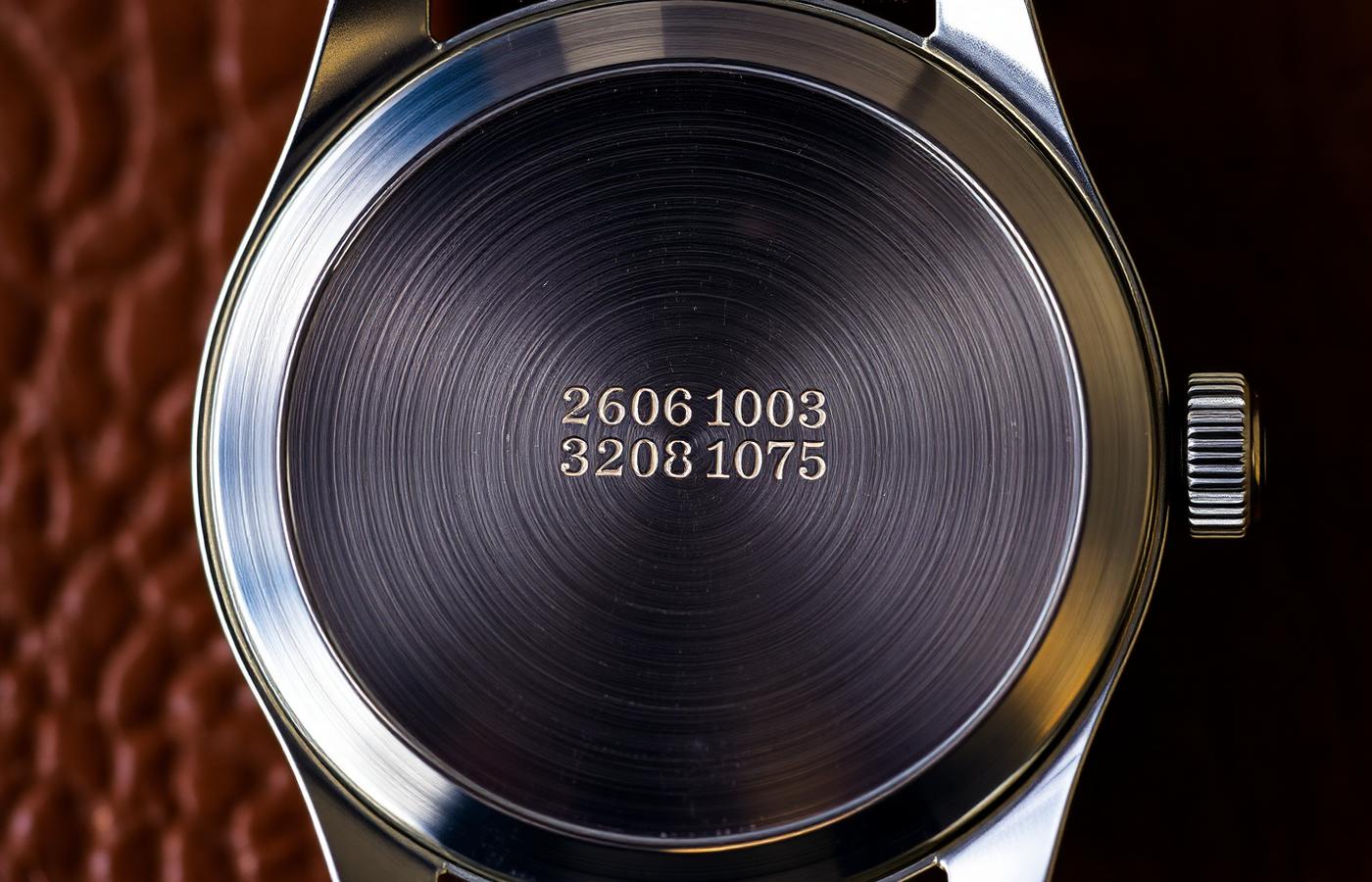
Service technicians historically scratched or engraved small dates and initials on the caseback interior at each intervention. These marks are a useful history of how often and where the watch has been serviced, and they can help calibrate expectations for the current condition of the caliber.
A caseback with no service marks on a watch of forty or more years is unusual and warrants further questions. Either the watch has been extraordinarily lightly used, or the caseback itself has been replaced, or the service marks have been polished away.
When to Involve a Professional
For any high-value acquisition, ask the seller for a professional condition report from an independent watchmaker familiar with the brand. The cost is small relative to the transaction and dramatically reduces the risk of buying a piece whose movement story does not match its exterior story.
If the seller resists this request, treat that resistance as diagnostic information. Confident sellers of well-attributed pieces routinely welcome independent inspection.
Closing Perspective
The movement is the least visible but most decisive part of a vintage watch's identity. Investing time in caliber literacy pays back many times over the life of a collecting habit.
Background Knowledge
A caliber is a specific movement design produced in defined variants across a range of years. Reference and caliber pairings are documented in reference guides for all major twentieth-century brands, and a mismatch is one of the strongest indicators of a swapped or franken piece.
Extended Notes
Not every caliber swap is deceptive. Some period-correct service replacements installed a slightly later caliber variant into an earlier case because the original was no longer available. Distinguishing period-correct service work from opportunistic assembly requires familiarity with each brand's service history.
Frequently Asked
- Should I open the caseback myself?
- Only if you have the correct tools and experience. Poorly executed opening can damage gaskets, scratch the caseback interior and reduce the watch's value.
- What does matching numbers mean?
- It usually refers to the case serial matching the caseback serial, and the movement serial falling within the expected range for the case production year.
Collector Value Note
A period-correct movement in a case of the same year, with matching finish and no signs of swap, adds a clear premium over a piece with a later replacement caliber, even if both technically function.
Sources & Further Reading
- Published caliber reference books for major twentieth-century Swiss manufacturers
- Manufacturer archive services
This article is editorial commentary. It does not constitute authentication, valuation or investment advice.
Related Reading
More From the Register