Online Auction Platforms Versus Live Rooms in 2026: A Practical Comparison
Timed online sales now account for a majority of vintage watch lots by volume, but hammer economics, condition risk and buyer's premium structure still favour the live room for pieces above a certain threshold.
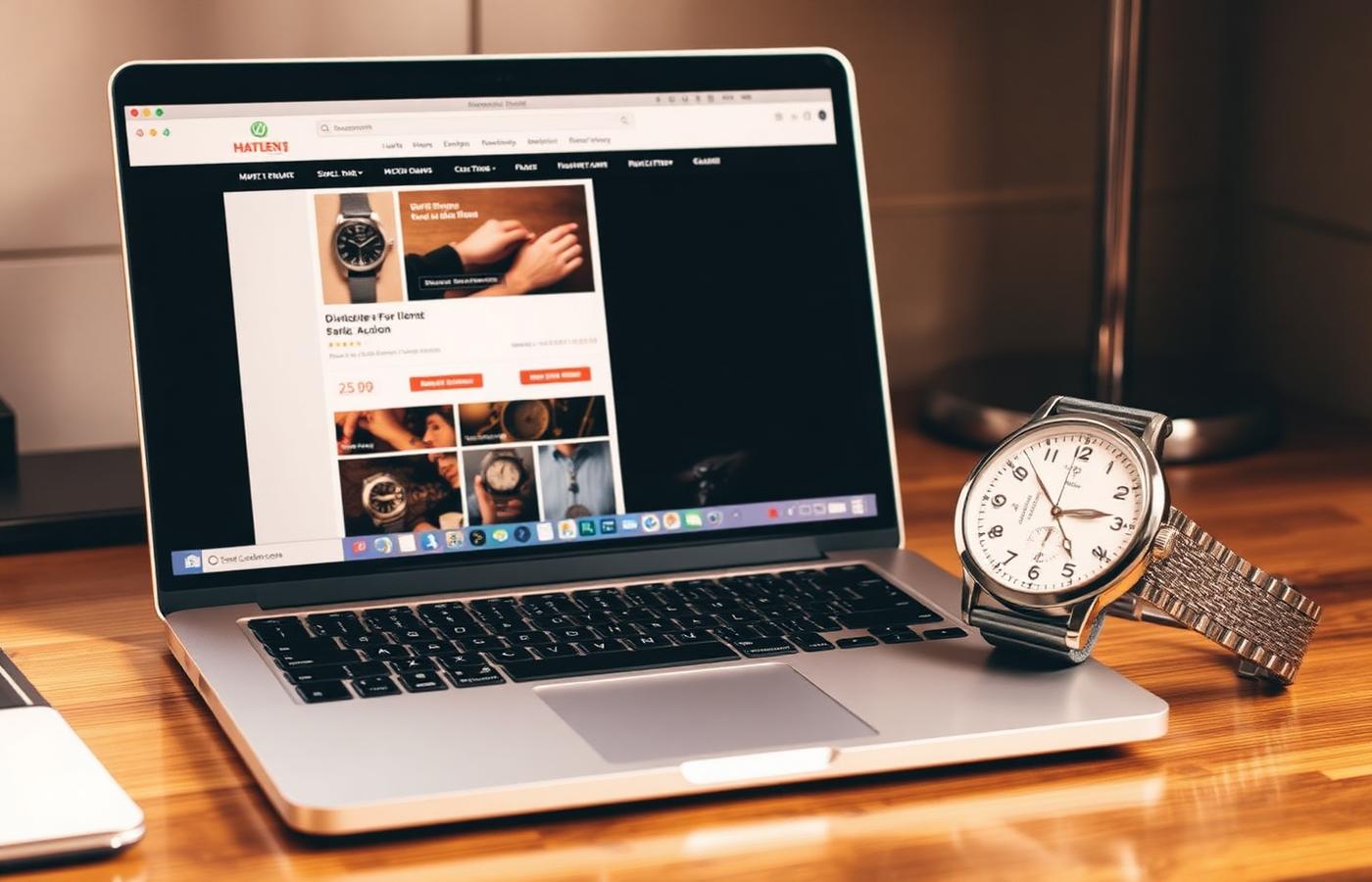
The choice between an online platform and a live room used to be a debate about serious versus casual selling. In 2026 it is a debate about matching each piece to the channel where its bidder pool is actually deepest. Understanding how those pools differ, and how buyer's premium structures interact with them, is now a core skill for anyone buying or selling regularly.
Volume Versus Depth
Online platforms clear enormous volume. A single weekly sale on a leading platform can hammer more individual lots than an entire Geneva sale week. That volume creates comparability: for common references you can benchmark hammer prices across dozens of comparable lots per quarter.
Live rooms clear fewer lots but attract deeper single-piece bidders. When a top-condition example of a scarce reference appears in a live room, the audience is willing to fight for it in a way online platforms have not consistently replicated for pieces above roughly one hundred thousand dollars.
Buyer's Premium Arithmetic
A CHF 10,000 hammer at a top Geneva house costs the buyer roughly CHF 12,600 before local VAT. The same hammer on a leading online platform costs the buyer roughly CHF 11,700. For entry-level pieces that gap is often the difference between winning and losing at any given clearing price.
On marquee lots the arithmetic inverts. A CHF 500,000 hammer in Geneva still nets the consignor more than the same hammer online, because Geneva audiences pay through the premium in a way online audiences historically do not.
Condition Risk and Documentation
Live room condition reports remain the gold standard. Specialists physically handle each lot, describe polishing history in nuanced language, and are personally reachable for follow-up questions before the sale.
Online platform reports vary widely. The best platforms now offer multi-angle photography, service history documentation and clear return policies. The weakest still rely on consignor-supplied images. Never bid seriously online without escalating to human contact with the platform's specialist.
Choosing the Right Channel
For pieces valued below roughly twenty thousand dollars, online platforms usually deliver the better economic outcome for both buyer and seller once fees are accounted for. Audience depth is sufficient and premium economics are favourable.
For pieces above roughly one hundred thousand dollars, the live rooms remain dominant. Between those two thresholds is a genuine grey zone where the right answer depends on the specific reference, condition and the consignor's tolerance for uncertain clearing.
Closing Perspective
Neither channel is inherently better. The collector who treats them as complementary tools, and who chooses the right channel for each piece rather than defaulting to one, consistently outperforms the collector who only uses one type of sale.
Background Knowledge
Timed online watch auctions grew from a niche channel in 2015 to the dominant volume channel by 2023. Both dedicated specialist platforms and the online arms of traditional houses now run weekly sales.
Extended Notes
Buyer's premium on online platforms typically sits between 15 and 20 percent, notably lower than the 26 percent charged by the top Geneva houses. That gap matters more on entry-level pieces than on marquee lots, where consignor relationships and audience depth outweigh premium arithmetic.
Frequently Asked
- Are online platform condition reports reliable?
- They are broadly reliable but shallower than traditional house reports. Always request additional images before bidding above a few thousand dollars.
- Do online sales attract weaker bidders?
- They attract a different bidder profile, generally younger and more price-sensitive. This can favour sellers of entry-level pieces and buyers of marquee complications.
- How do returns and disputes work online?
- Most platforms offer a short authentication window, typically five to fourteen days. Read those terms carefully before bidding on higher-value lots.
Collector Value Note
As a rough rule, sell entry-level pieces online where the premium gap works in your favour, and consign marquee pieces to a live room where audience depth pays for the higher premium.
Sources & Further Reading
- Published fee schedules of the leading online auction platforms
- Comparative hammer data on identical references sold in both channels during 2024 and 2025
This article is editorial commentary. It does not constitute authentication, valuation or investment advice.
Related Reading
More From the Register

Market Trends
Geneva Spring 2026 Auction Recap: Steel Sports Cool, Complicated Vintage Warms


Market Trends