Storage, Humidity and Magnetism: Getting the Environment Right for Vintage Watches
Where and how you store vintage watches matters as much as how often you service them. Humidity, temperature stability and magnetic exposure quietly damage pieces over years.
The service interval receives most of the attention in vintage watch care conversation, but service is a periodic intervention. Environment is continuous. A watch that spends fifty weeks a year at the wrong humidity or in proximity to magnetic sources will accumulate more damage in that period than any single service can address. Getting environment right is the highest-leverage care decision you can make.
Humidity: The Silent Adversary
Vintage cases were never fully sealed against long-term humidity ingress. Case gaskets degrade, crystals shift microscopically, and moisture-laden air finds its way onto dial surfaces over years. Once inside, humidity causes lume degradation, dial spotting and hairspring corrosion.
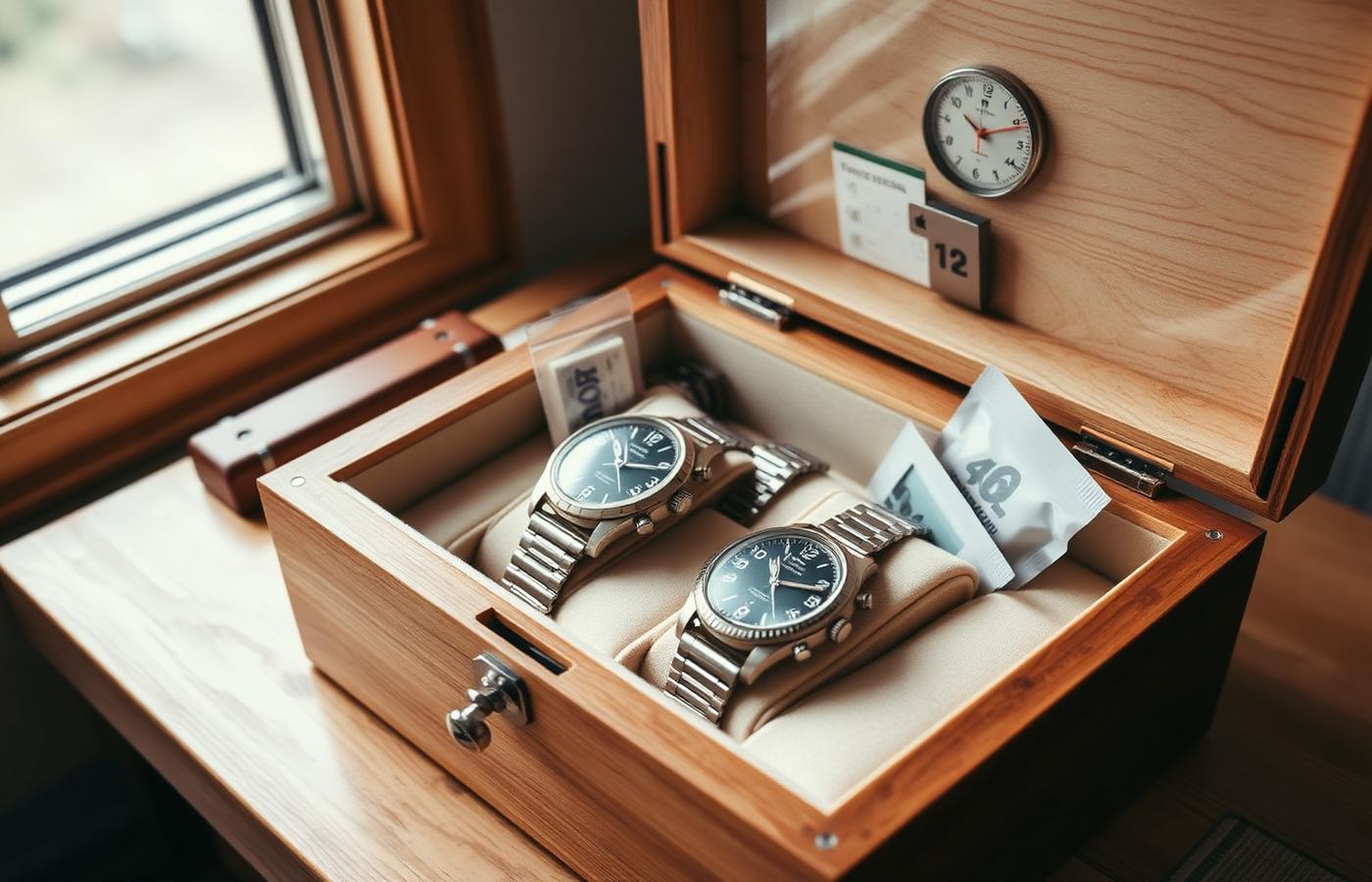
Aim for stable 40 to 55 percent relative humidity in your storage environment. A small digital hygrometer inside your watch box or safe costs almost nothing and gives you an early warning system. Silica gel packets, refreshed twice a year, keep humidity in range in most climates without active dehumidification.
Temperature Stability
Absolute temperature matters less than temperature stability. A watch that cycles from ten to twenty-five degrees Celsius daily is stressed far more than one held steady at either temperature. Thermal cycling drives moisture in and out of the case with each cycle, accelerating gasket degradation.
Store pieces away from exterior walls, direct sunlight and any source of thermal fluctuation. An interior drawer in a temperature-stable room is better than a decorative display cabinet on a sunny wall, however attractive the second option looks.
Magnetism in the Modern Home
The most common source of unexpected magnetisation in 2026 is not a workshop tool but a magnetic tablet cover or a smartphone case. These generate fields strong enough to magnetise a vintage hairspring during a single overnight exposure at close range.
Keep watches away from all magnetically closed cases, laptop hinges, speaker enclosures and refrigerator doors. If a watch begins running noticeably fast after any suspected exposure, take it to any competent service centre for a two-minute demagnetisation before assuming caliber trouble.
Rotation and Long-Term Storage
Watches held in long-term storage benefit from being wound and run for ten minutes every four to six weeks. This circulates lubricants, prevents them from pooling in one position, and extends effective service intervals meaningfully.
Automatic pieces do not require a winder for this purpose. Manual movement of the hands to distribute wear is sufficient, and it avoids the constant low-level stress that continuous winder use places on gear trains.
Closing Perspective
Environment is one of the few areas of vintage watch care that costs almost nothing to get right and quite a lot to get wrong. A hygrometer, a stable drawer, and a mental map of the magnetic sources in your home are enough to preserve most of what you own indefinitely.
Background Knowledge
Twentieth-century watches were designed to be worn daily and stored in a bedroom drawer at night. They were not designed to spend decades sealed in an airless safe at variable humidity, which is how many now live.
Extended Notes
Modern homes contain far more magnetic sources than mid-century homes did. Speaker magnets, tablet covers, laptop hinges and even certain kitchen appliances routinely expose watches to fields strong enough to affect timekeeping. Awareness is the first line of defence.
Frequently Asked
- What humidity range is safe?
- Aim for 40 to 55 percent relative humidity. Below 30 percent, lubricants dry faster; above 65 percent, corrosion risk rises noticeably.
- How often should I check the environment?
- A calibrated hygrometer in the storage box, checked weekly, catches most problems before they become expensive.
- What magnetic exposure is dangerous?
- Anything above 100 gauss can affect a vintage caliber. Modern demagnetisers handle most exposures cheaply if detected early.
Collector Value Note
A watch stored well for twenty years is worth measurably more at sale than an identical piece stored poorly. Environment is one of the few value-preserving investments you can make for essentially no ongoing cost.
Sources & Further Reading
- Published environmental specifications from three major vintage watch service centres
- Field measurements of household magnetic sources in a range of common domestic environments
This article is editorial commentary. It does not constitute authentication, valuation or investment advice.
Related Reading
More From the Register