Common Vintage Faults and the Right First Response
Sudden gain of five minutes a day, moisture behind the crystal, a stuck chronograph pusher: what each symptom usually means and what to do first.
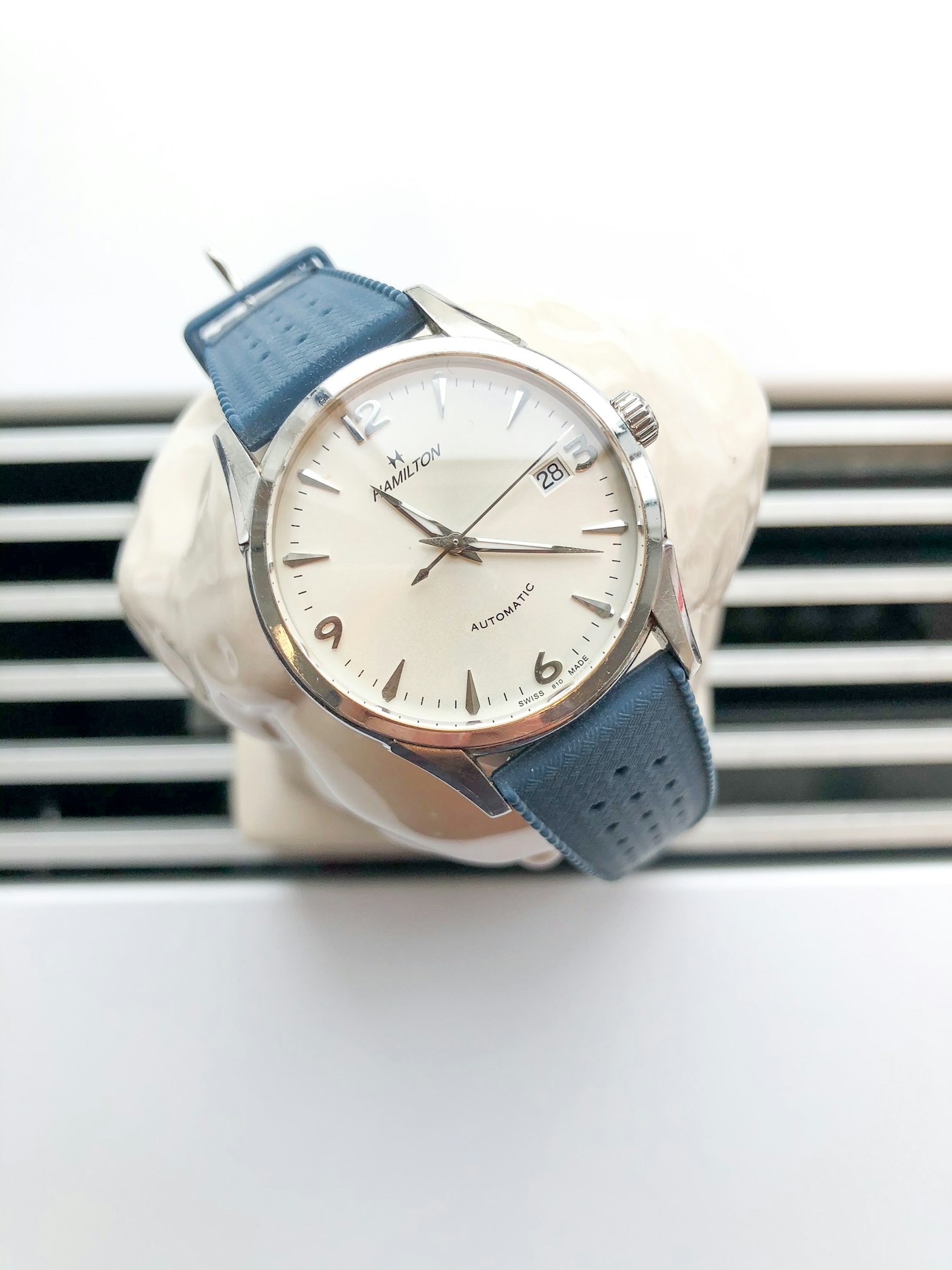
Most vintage watch problems announce themselves clearly if you know what to listen for. A short glossary of common symptoms and the right first response saves both money and mechanism.
Timekeeping Anomalies
Sudden gain of several minutes per day almost always indicates magnetisation. Modern life is saturated with magnetic fields, and most vintage calibers have limited shielding. A ten-minute demagnetisation at a watchmaker usually restores normal rate at negligible cost.
Gradual loss of a minute or more per day over weeks often indicates lubricant breakdown, particularly if the piece is approaching or exceeding a normal service interval. This is a routine service candidate rather than an emergency.
Moisture and Corrosion
Any visible moisture inside the crystal is an emergency. Stop wearing the watch immediately, place it dial-up in a warm, dry environment and get it to a watchmaker as soon as possible. Water begins to rust movement parts within days, and the cost of an early intervention is a small fraction of a full corrosion overhaul.
A whitish haze on the underside of the crystal without visible droplets can indicate humidity intrusion through aged gaskets. This deserves attention at the next scheduled service rather than emergency care, but note it in the watch file so it is not overlooked.
Mechanical Resistance
A crown that is unusually hard to wind, sets with grinding resistance or feels loose in its threads all warrant prompt inspection. The keyless works are among the more delicate and less accessible parts of the movement, and small problems become large ones quickly under continued use.
A chronograph pusher that no longer returns crisply, or that requires unusual force to engage, indicates a chronograph work issue that should not be ignored. Continuing to use a misbehaving chronograph often damages components that would otherwise still be serviceable.
The Right Escalation Path
For non-urgent symptoms, note the problem in your watch file and address it at the next scheduled service. For urgent symptoms such as moisture or major timing shifts, contact your watchmaker within days and describe the symptom precisely rather than in general terms.
Photographs help. A clear image of moisture location or a video of an unusual crown feel gives the watchmaker useful information before the watch physically arrives, and often speeds diagnosis meaningfully.
Closing Perspective
Vintage watches reward attentive owners with decades of reliable service. Learning the vocabulary of common symptoms turns each small warning into a manageable event rather than a costly surprise.
Background Knowledge
Vintage watches signal problems through a small vocabulary of symptoms. Learning to read these signals accurately shortens the diagnostic conversation with a watchmaker and often reduces repair cost.
Extended Notes
Not every symptom requires immediate service. Some are self-correcting once the underlying cause is removed, particularly magnetism-driven rate changes. Others demand prompt intervention because delay compounds the damage.
Frequently Asked
- My watch suddenly gains five minutes a day. What happened?
- Most commonly magnetism. Demagnetise professionally before assuming any deeper mechanical problem.
- There is moisture behind the crystal. What now?
- Stop wearing the watch immediately, keep it dial-up and get it to a watchmaker within days rather than weeks. Water inside the case begins rusting the movement quickly.
Collector Value Note
Prompt response to warning symptoms protects both the mechanism and the collectible value. A watch that has run consistently through its life shows better rate and cleaner internals than one repeatedly ignored between symptoms.
Sources & Further Reading
- Independent watchmaking troubleshooting guides
- Manufacturer service documentation excerpts
This article is editorial commentary. It does not constitute authentication, valuation or investment advice.
Related Reading
More From the Register


Care & Restoration