Daily Habits That Extend the Life of a Vintage Watch
The single biggest driver of vintage watch longevity is not service quality but daily handling. A short list of habits that protect both the movement and the collectible value.
New vintage owners often assume that service determines longevity. It matters, but it is downstream of a much bigger factor: the small handling choices you make every day. Ten simple habits protect a vintage watch far more than any single trip to a workshop.
Winding and Setting
Wind a manual-wind piece off the wrist, holding the case gently and turning the crown slowly. Winding on the wrist puts sideways pressure on the winding stem that accelerates wear on the keyless works.
Set the time in the forward direction whenever possible, and avoid setting the date between roughly nine in the evening and three in the morning, when many vintage date mechanisms are already engaged and vulnerable to damage.
Water and Moisture
Do not swim, shower or dive with a vintage watch unless it has been recently pressure-tested. Original water resistance ratings almost always assumed fresh gaskets, which decades of service intervals cannot be relied upon to maintain.
Even splash exposure is risky if the crown is not fully screwed down or fully seated. A single unnoticed drop of water inside a case can rust the movement to the point of requiring a full overhaul.
Magnetism
Modern life is saturated with magnetic fields from phones, laptops, tablet cases, wireless charging pads, kitchen appliances and even some handbag closures. Vintage calibers without soft-iron shielding are highly susceptible to magnetisation, which typically shows up as sudden gain of several minutes per day.
Keep the watch at least ten centimetres away from these sources when possible, and demagnetise professionally at the first sign of unexplained rate change.
Physical Handling
Avoid impact sports, weightlifting and any activity that shocks the wrist. Vintage balance staffs are among the most fragile components in the caliber and repair after impact damage is expensive.
When removing the watch at the end of the day, place it on a soft surface rather than a hard nightstand. A single accidental drop can bend a lug or crack a crystal in a way that compromises both function and value.
Rotation and Storage
If you own more than one vintage piece, rotate wear rather than favouring one until failure. Regular running in short cycles keeps lubricants distributed better than long idle periods.
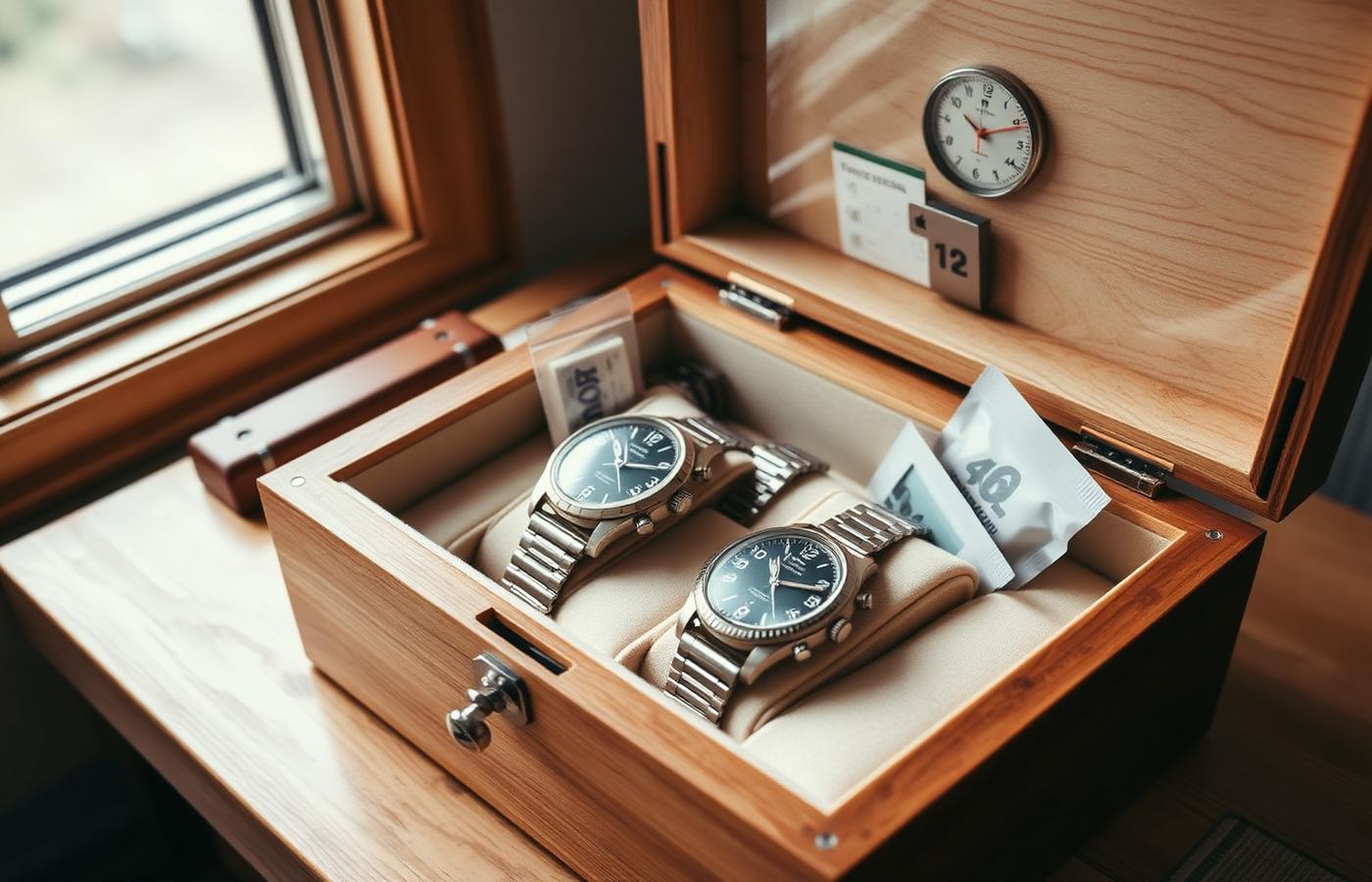
Store watches in a stable-humidity environment away from direct sunlight. Ultraviolet exposure fades dials and dries out gaskets faster than most owners realise.
Closing Perspective
Great vintage collections are built on small, boring habits repeated consistently. Master these and your watches will outlast you in better condition than they arrived.
Background Knowledge
A vintage watch is a mechanical object designed with tolerances that were adequate for daily use in its own era but that struggle with several modern habits: unpadded workouts, aggressive water exposure, magnetic environments and frequent temperature swings.
Extended Notes
Even the best-serviced vintage caliber will run poorly if it lives near a laptop, phone or wireless charging pad for eight hours a day. Magnetism is the most common invisible cause of unexpected timekeeping problems.
Frequently Asked
- Can I wear my 1960s watch in the shower?
- No. Even watches originally rated for water resistance should be treated as splash-proof at best without a current pressure test.
- How often should I service it?
- Every five to seven years for a daily wearer, less often for a piece worn occasionally, but always immediately if timekeeping degrades noticeably.
Collector Value Note
Consistent care habits preserve the sharp case edges, original bracelet stretch profile and dial cleanliness that together define a well-kept vintage example.
Sources & Further Reading
- Technical guidance published by major Swiss service centres
- Industry standards on water resistance testing for pre-owned watches
This article is editorial commentary. It does not constitute authentication, valuation or investment advice.
Related Reading
More From the Register

Care & Restoration