Three Generations, One Drawer: A Family That Never Sold a Watch
In rural southwestern France, one family has kept every wristwatch bought since 1948. The result is an unusually complete portrait of European everyday timekeeping across seventy years.
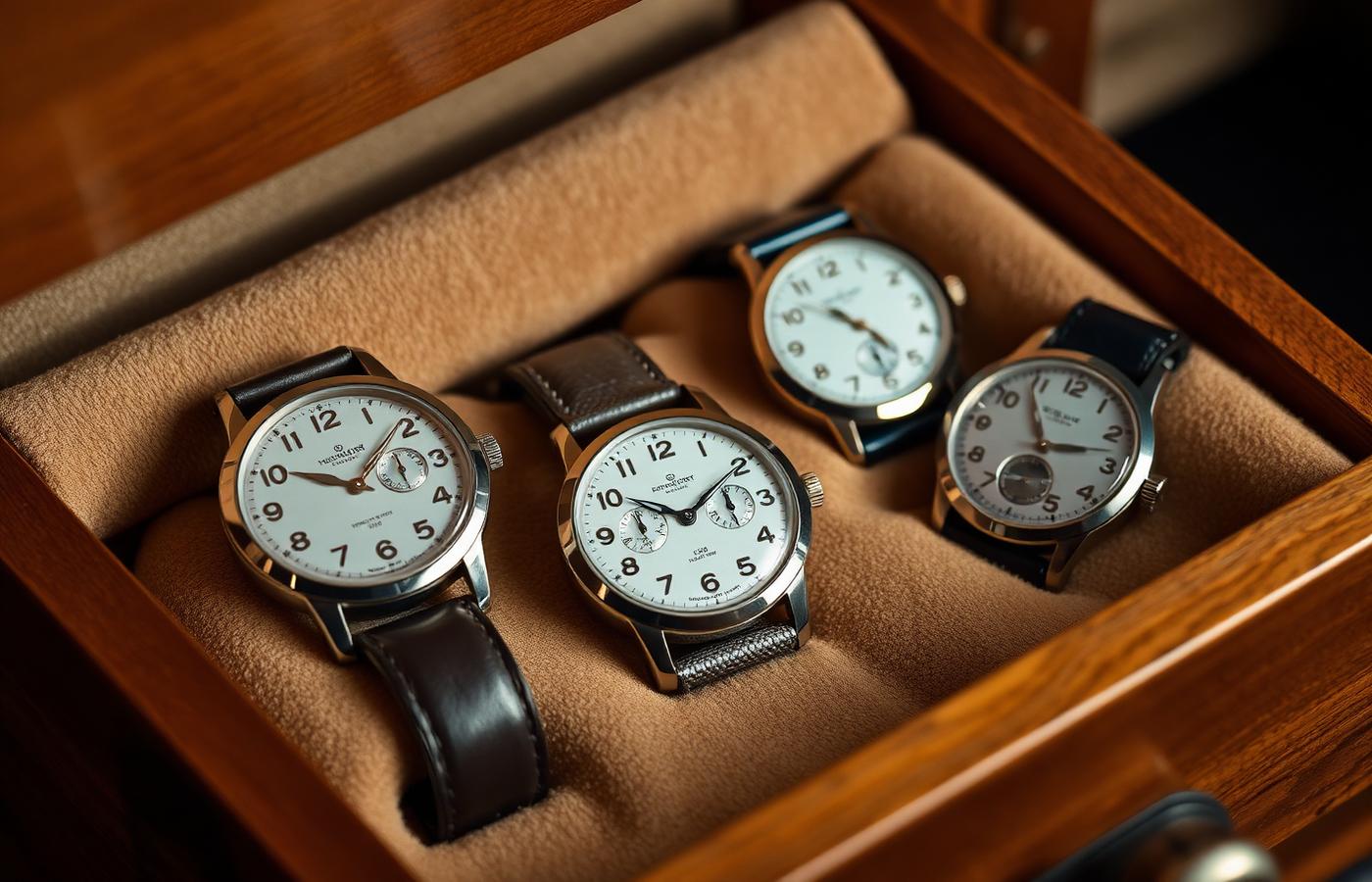
The Bertrand family lives in a stone farmhouse in the Lot-et-Garonne department of southwestern France. In a single wooden drawer in the main bedroom sits every wristwatch bought by the household since 1948, from a Swiss-made everyday piece purchased for a young farmer's marriage that year through a modern Japanese quartz worn by the current head of the family. There are forty-seven watches in total, and every one still runs.
The Culture Behind the Archive
The family does not describe itself as a watch-collecting household. The archive exists because of a broader household culture in which useful objects are preserved rather than replaced. Boots are re-soled, kitchen knives are re-handled, and watches are serviced rather than upgraded.
The single drawer where retired watches live is a form of quiet family archive. Each generation added to it without formal intent, and the result today is a cross-section of French rural life told through the wristwatches four generations of one family found useful.
What the Archive Contains
The oldest piece is a small Swiss manual-wind watch bought for a wedding in 1948. It sits alongside a robust chronograph acquired for shift work in the 1960s, a slim dress reference for a daughter's graduation in the 1970s, and a rugged sport model chosen for military service in the 1980s. The 1990s and 2000s add several quartz pieces bought as everyday tools rather than statements.
Every watch carries a small paper card with the buyer's name, the year of purchase, the retailer and the reason. Several include short notes about repairs, and a few carry longer letters written by later family members explaining what a particular piece meant to them.
Why It Matters Beyond the Family
Museums and academic historians of consumer culture increasingly seek out archives like this because they preserve a story that individual auction catalogues cannot tell. The everyday watches most people bought, wore and eventually retired are almost entirely absent from the mainstream horological narrative.
The Bertrands' decision to loan twenty pieces to the local departmental museum, while retaining the rest in family use, is a thoughtful model. It allows public scholarship and personal continuity to coexist without forcing a full liquidation of the archive.
What Individual Collectors Can Learn
A family archive is impossible to replicate through purchase, but the underlying principles translate to any personal collection. Preserve provenance in writing, keep every accompanying paper and photograph, and treat each acquisition as an entry in a longer story rather than an isolated event.
Perhaps most importantly, resist the temptation to prune. Watches that seem unglamorous today often become the most historically informative pieces decades later, precisely because they were never considered special enough to protect at the time.
Closing Perspective
Not every collection will span three generations. But every collection that treats itself as an archive, rather than an inventory, gains value the family and its community will appreciate long after any single piece changes hands.
Background Knowledge
Complete family archives of everyday watches are extremely rare. Most families sell, gift or lose pieces across generational transitions, which is why the surviving archives that do exist are disproportionately valuable to social historians.
Extended Notes
The Bertrand family, whose collection is discussed here, has given the local departmental museum a long-term loan of twenty selected pieces for public display, while retaining the balance of the archive for family use.
Frequently Asked
- How does a family end up with a complete archive?
- Usually through a strong household culture of preservation combined with a physical space, often a single drawer, that becomes the accepted resting place for every watch that leaves active use.
- Should collectors approach families like this to buy?
- Almost never. These archives are family heritage rather than inventory, and cold approaches are usually poorly received.
Collector Value Note
Family archives of this completeness rarely reach the market intact. When they do, condition and provenance often support a meaningful premium against comparable single-owner examples.
Sources & Further Reading
- Interview conducted with the family with permission for this article
- Departmental museum public exhibition catalogue
This article is editorial commentary. It does not constitute authentication, valuation or investment advice.
Related Reading
More From the Register
Collector Profiles
Profile: A Berlin Collector Who Built an Archive at the Sunday Flea Market
Collector Profiles
Beyond the Famous Names: Five Obscure Swiss Manufactures Worth Following
Collector Profiles
Two Collections, One Household: How a Couple Coordinates a Shared Archive
Collector Profiles